
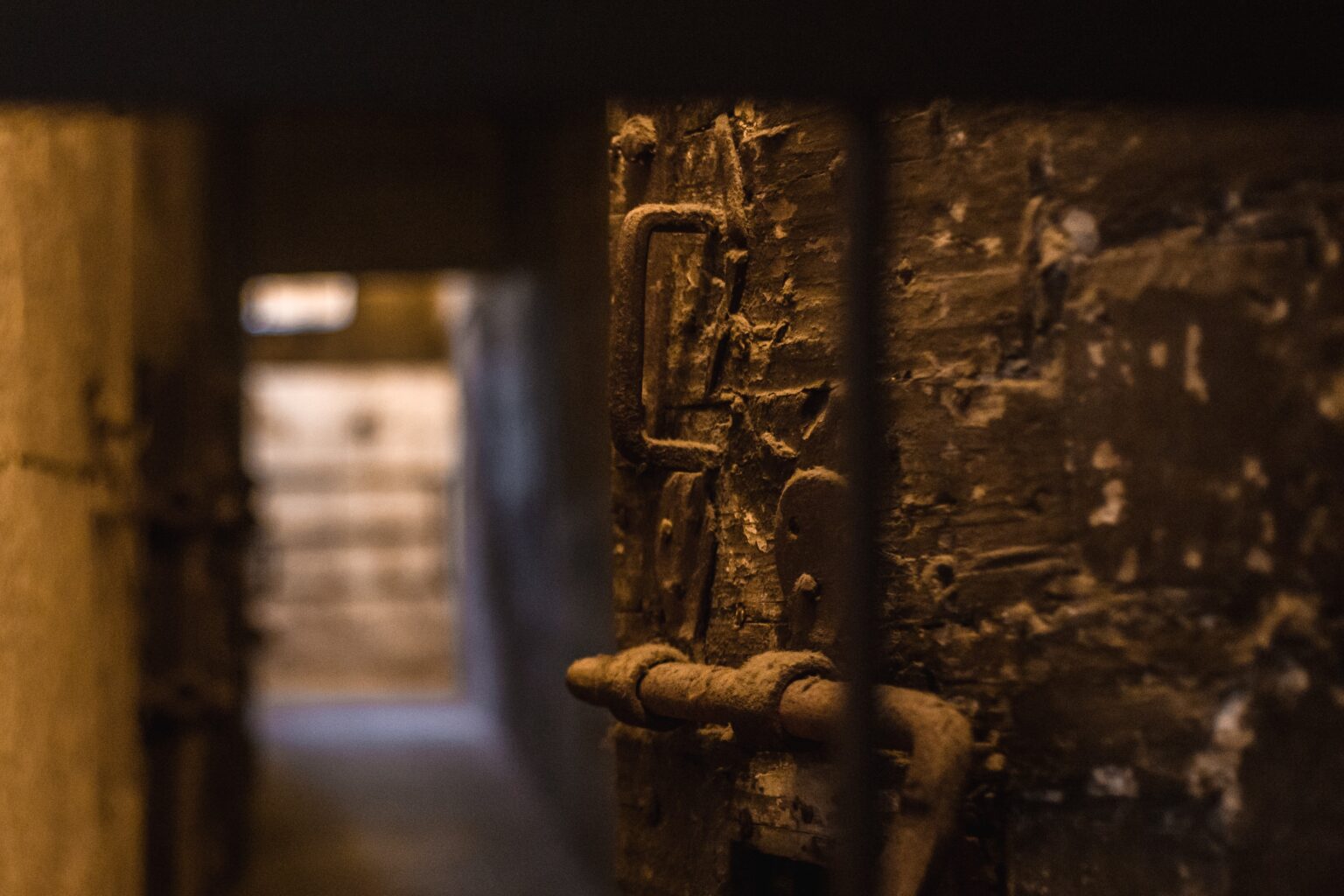
Despite being purpose-built, the New Prisons failed to solve one of the most serious problems of Venetian detention: overcrowding.
Cells quickly came to house far more prisoners than intended. Spaces were small, shared, and difficult to keep in acceptable condition. Cleaning took place only a few times a year, using vinegar and quicklime, while a wooden bucket served as a shared toilet, making the air heavy and hard to breathe.
Constant humidity, typical of the lagoon environment, encouraged the spread of disease, epidemics, insects and rodents. Prison life meant living every day with a serious risk to one’s health.
Historical data is clear: in the prisons inside the Doge’s Palace, only about 35 percent of prisoners survived. In the New Prisons Palace, survival rose to around 45 to 50 percent. In other words, for roughly half of the inmates, prison remained a place from which one did not emerge alive.


